Preventive & General Dentistry
Laser Dentistry in Irving, TX
Focused light instead of a drill or a scalpel — often with less anesthetic, less bleeding and faster healing.
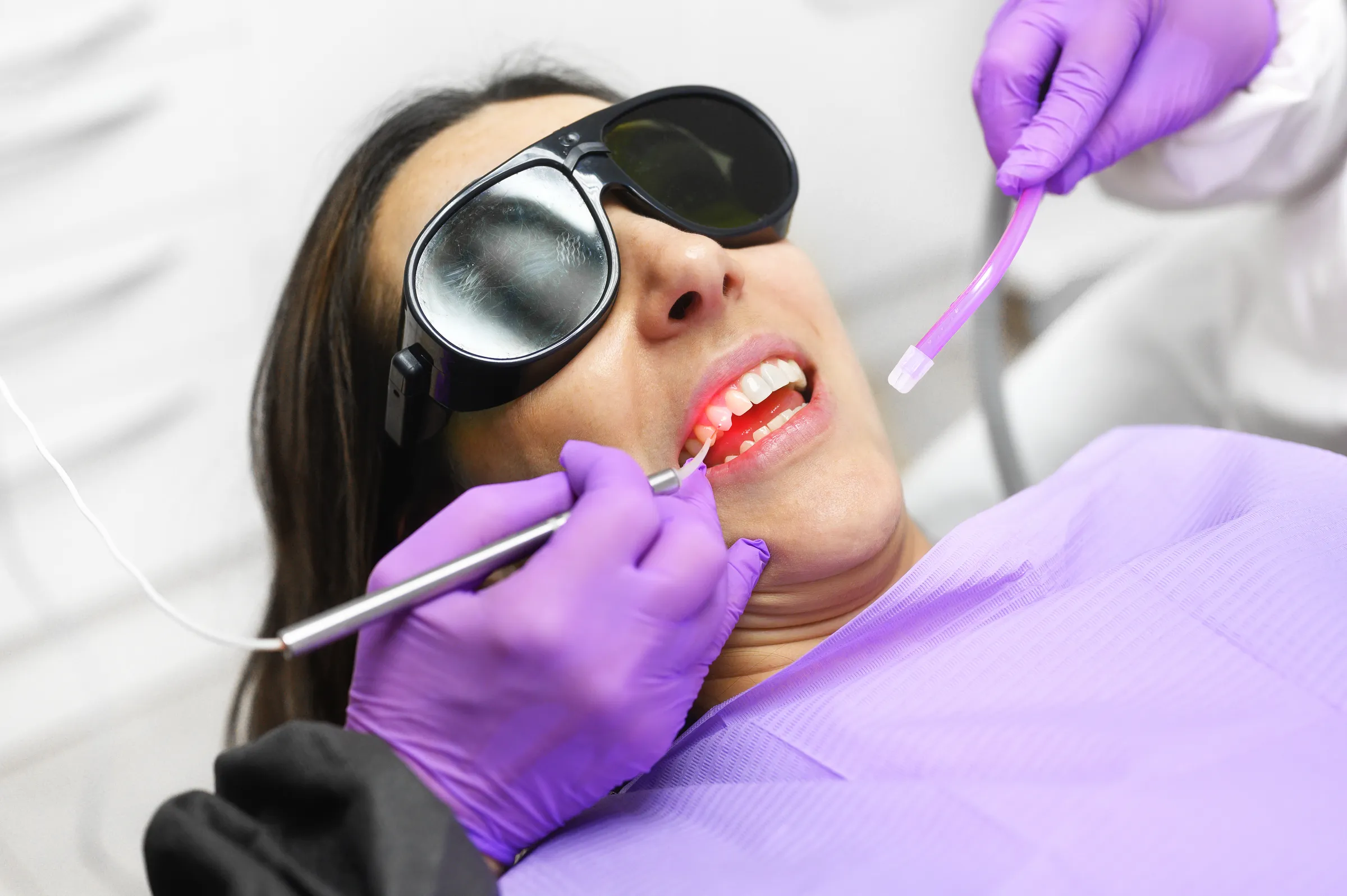
Laser dentistry treats both soft tissue and hard tissue with more precision than traditional instruments allow. At Dental Concepts & Orthodontics we use it across gum treatment, cavity work, root canals and cosmetic procedures.
Dentistry with the patience of a private studio.
Advanced, Comfortable Care with Laser Dentistry
Laser dentistry uses focused light energy to carry out dental procedures with greater precision, less discomfort and reduced healing time. It works on soft tissue such as gums and on hard tissue such as teeth, and it frequently requires less anesthesia than the conventional equivalent.
Why Patients Prefer It
- Less Discomfort Lasers reduce the need for anesthesia and minimize bleeding, swelling and post-treatment pain.
- Faster Healing Recovery is generally quicker, so you get back to normal sooner.
- Precision The laser targets the problem area while preserving the healthy tissue around it.
What We Use It For
Soft Tissue Procedures
- Gum Disease Treatment Lasers remove infected gum tissue and kill the bacteria in periodontal pockets — less invasive than conventional gum surgery, with faster healing.
- Gingivectomy and Gingivoplasty Reshaping or removing excess gum tissue, whether for a gummy smile or to prepare a gum line for a crown or bridge.
- Frenectomy Releasing the frenulum in tongue-tie and lip-tie cases, quickly and without sutures. Particularly valuable in children.
- Cold Sore and Canker Sore Treatment Reducing pain and healing time, often with relief felt immediately after treatment.
Hard Tissue Procedures
- Cavity Detection and Removal Lasers find cavities earlier than conventional methods and remove decay with minimal damage to the healthy tooth around it.
- Tooth Preparation for Fillings Often eliminating the need for anesthesia altogether.
- Treating Sensitivity Sealing the tubules on tooth roots that cause sensitivity, for long-term relief.
- Crown Lengthening Removing gum tissue to prepare a tooth for a crown or veneer, without more invasive surgery.
Other Uses
- Biopsies and lesion removal — precise, with faster healing than conventional technique
- Root canal disinfection — cleaning the tooth thoroughly and reducing the risk of reinfection
- TMJ pain therapy — reducing inflammation and pain in the jaw joint, non-invasively
- Bone shaping for implants — preparing the implant site with minimal trauma to surrounding tissue
- Whitening — accelerating professional whitening agents for a faster result
Ask Us About Laser Treatment
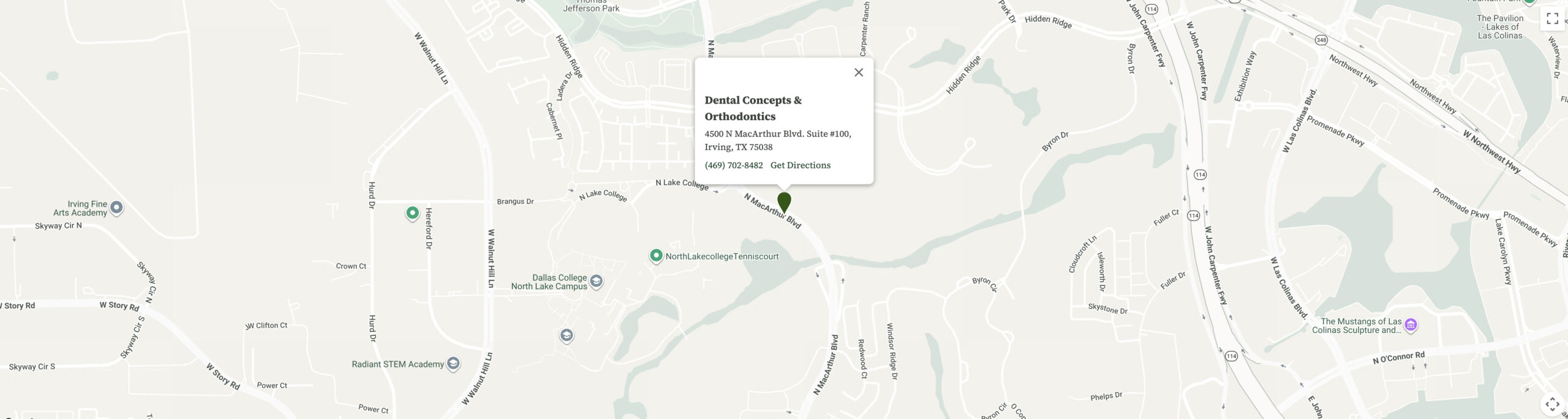
If you have been putting off gum treatment or a filling because of how it sounds, this is worth a conversation. Call us on (469) 702-8482 or visit us at 4500 N MacArthur Blvd. Suite #100, Irving, TX 75038.
Laser Dentistry FAQ
- What is laser dentistry, and how does it work?
- It uses focused light energy to perform procedures on soft and hard tissue. The precision means less impact on the surrounding area, which reduces discomfort, speeds healing and often removes the need for drills or scalpels.
- Is laser dentistry safe?
- Yes. It is approved by the American Dental Association for a range of dental procedures, and our team is trained in its use.
- Does it hurt?
- Most patients feel little to no pain. In many cases it reduces or removes the need for anesthesia entirely.
- Can it be used for gum disease?
- Yes, and it is highly effective. Lasers remove infected tissue and kill bacteria in periodontal pockets, which promotes faster healing and often avoids invasive gum surgery.
- Is it suitable for children?
- Yes — particularly for procedures such as frenectomy for tongue-tie, and for managing cavities. The minimally invasive approach makes treatment less stressful for young patients.
- How long is recovery?
- Generally shorter than with traditional methods, because there is less damage to surrounding tissue. Many patients return to normal activities shortly afterwards.
- Does insurance cover it?
- Most plans cover procedures that are medically necessary, whether or not a laser is used. Check the specifics with your provider.
- Does it replace the drill entirely?
- In many cases, yes — for cavity removal and gum surgery in particular. Some treatments still call for conventional instruments, depending on complexity.
General dentist
Dr. Nirav Patel, DDS
General & Cosmetic – Associate Dentist
Dr. Krysten Barnes, DDS
Office Hours
Monday8:00 am – 5:00 pm
Tuesday7:00 am – 3:00 pm
Wednesday7:00 am – 3:00 pm
Thursday8:00 am – 5:00 pm
Friday8:00 am – 12:00 pm
SaturdayClosed
SundayClosed